The proposed
technical foundation.
The published application describes transmitter and receiver embodiments, molecular hydrino species, neutrino absorption and emission, EPR detection, encoding, alignment, and multiplexing. The architecture and its performance are the subject of the company's development work.
The CνB/GUTCP framework
The CνB/GUTCP framework describes the neutrino as a massless, electrically neutral, spin-½ photon and identifies molecular hydrino as a spin-½ molecule. Molecular hydrino behaves as a nucleon with quarks and gluons, and interacts with low-energy neutrinos. These interactions enable detection of cosmological-background neutrinos that have previously been beyond the reach of detectors.
A proposed interaction advantage
Within this framework, the interaction cross section of molecular hydrino with the cosmological neutrino background is estimated to be about 28 orders of magnitude greater (10000000000000000000000000000 times) than the interaction cross section of solar neutrinos with current neutrino detectors. This is the comparison advanced for the CνB system.
These properties form the basis of the proposed digital communications architecture: a transmitter digitally modulates the cosmological neutrino background flux, and a receiver detects that modulation to recover the information.
Toward CνB compact devices
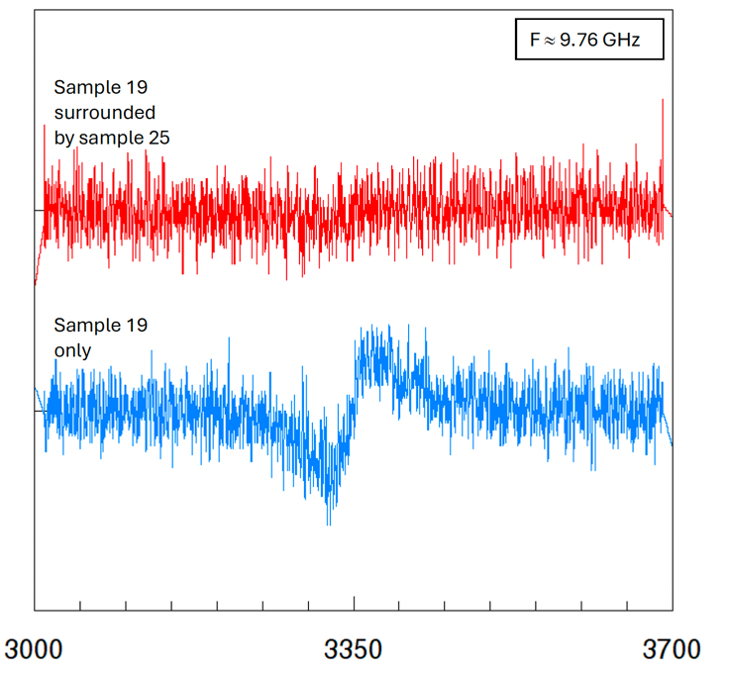
The framework places the energy of the CνB band in the same range as the electron paramagnetic resonance (EPR) spectral band. This correspondence underlies the company's proposal to use established, highly miniaturized EPR technology in compact CνB transmitter–receiver devices, including secure, low-power-consuming, handheld devices.
198985 A1
DIGITAL LOW-ATTENUATION
COMMUNICATION SYSTEM
Different energies.
Different detection challenges.
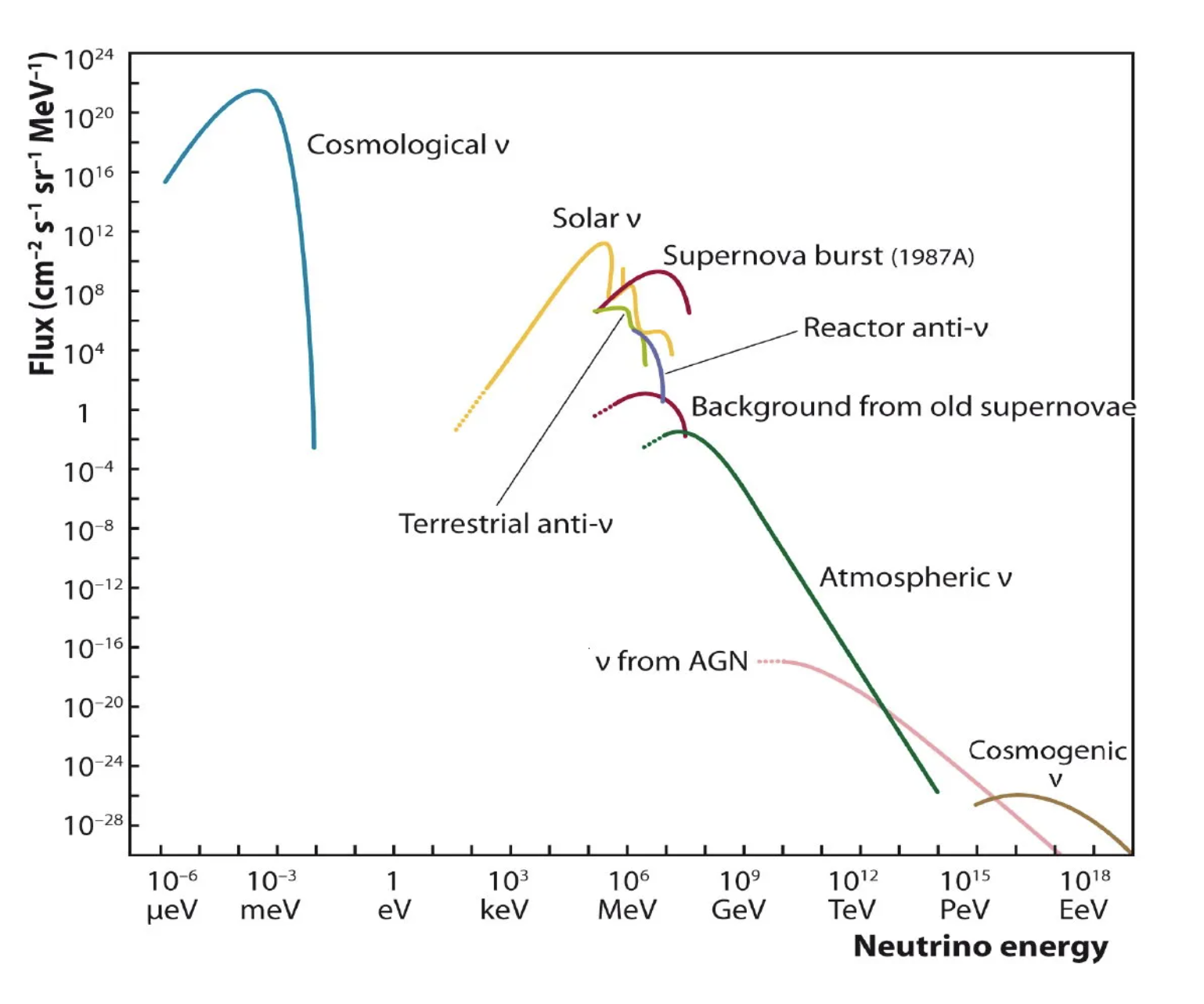
Neutrino experiments cover widely different energy ranges. Their sensitivity depends on the interaction being measured, the detector material, backgrounds, and the analysis—not a single universal energy cutoff.
Why the low-energy end is difficult
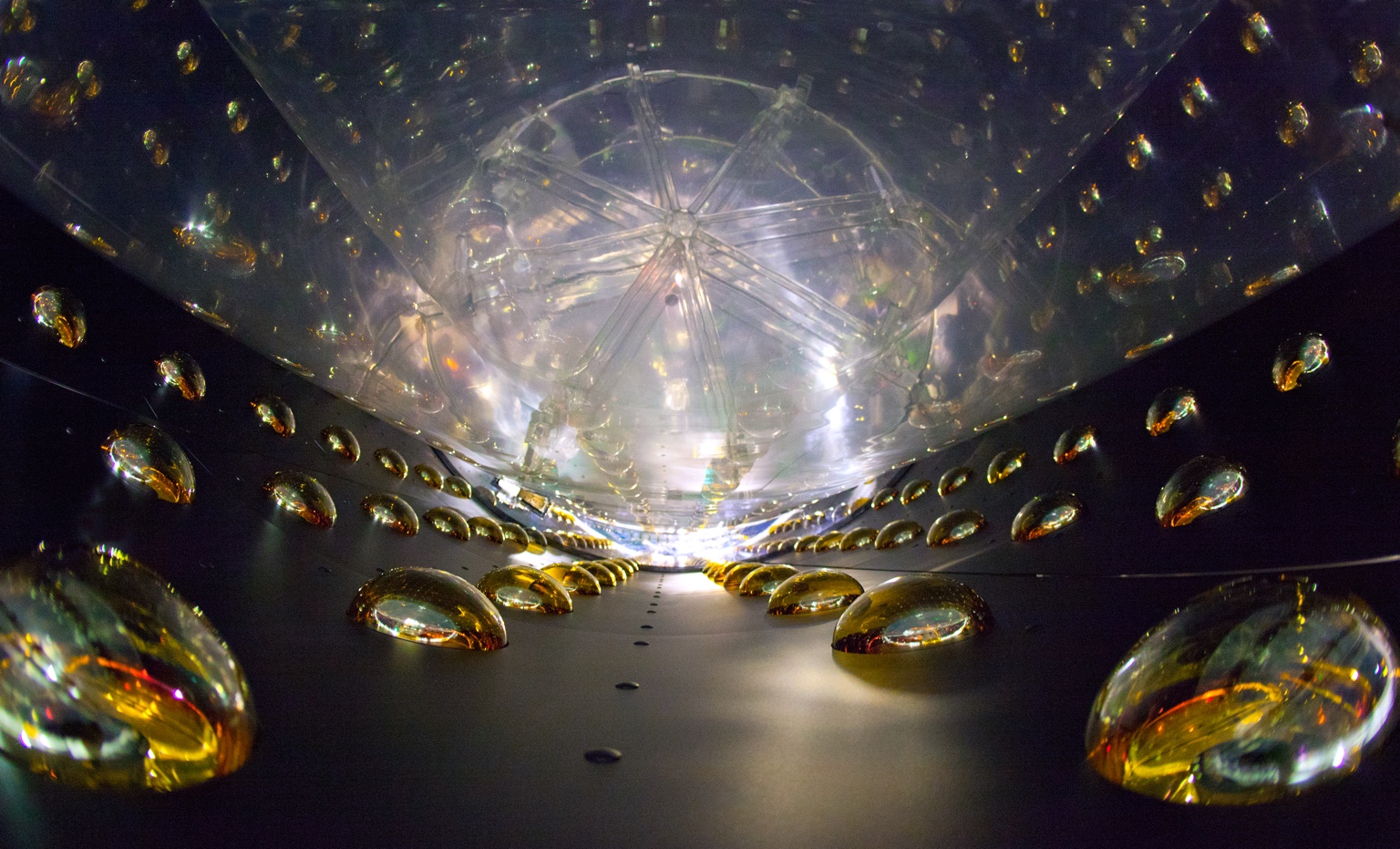
At low energies, neutrino interactions can produce exceptionally small signals. Detecting them requires control of radioactive backgrounds and instrumental noise, together with a suitable target and readout. A quoted threshold often describes the energy of a recoil electron or nucleus, rather than the incoming neutrino's energy.
| Experiment | Energy example | What the number means |
|---|---|---|
| Borexino Liquid scintillator | 165–590 keV | The fitted electron-recoil energy interval in the 2014 solar pp-neutrino analysis. This is an analysis window, not an absolute lower limit for all neutrino detectors. Borexino result ↗ |
| Super-Kamiokande Water Cherenkov | About 3.5 MeV | The recoil-electron kinetic-energy threshold reported for the SK-IV solar-neutrino analysis. It should not be read as an equivalent incoming-neutrino threshold. ICRR report ↗ |
| KM3NeT/ARCA Deep-sea telescope | About 220 PeV | The estimated neutrino energy of event KM3-230213A, recorded in February 2023 and reported in February 2025. An observed event energy is not an upper detector cutoff. KM3NeT result ↗ |
The cosmological-background challenge
The cosmological component in the supplied figure occupies a much lower energy scale than the solar, reactor, and high-energy neutrino populations used in these examples. Dedicated efforts such as PTOLEMY are pursuing direct detection of relic neutrinos through neutrino capture on tritium. This requires a different measurement strategy, rather than simply extending a conventional detector's recoil threshold downward. PTOLEMY detection research ↗
CνB's development approach targets this low-energy background through the molecular hydrino interactions and EPR readout described above.